

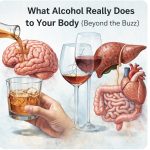
Alcohol is so normalized in our culture that most of us don’t stop to think about what it’s actually doing inside the body. We tend to measure “problem drinking” by obvious consequences — DUIs, lost jobs, broken relationships — but long before those show up, alcohol is already affecting the brain, hormones, gut, and nervous system.
This isn’t about fear-mongering or telling anyone what to do. It’s about understanding what’s happening biologically so you can make more informed, intentional choices about your health and your relationship with alcohol.
From the first sip, alcohol begins changing your biology. Some of those changes feel good in the moment — relaxed mood, lowered inhibitions, a social “buzz.” But behind the scenes, alcohol is affecting nearly every major system in your body. Over time, those effects add up.
Here’s what’s actually happening — both while you’re drinking and with regular use.
In the Brain
Alcohol works quickly on the brain’s chemistry. It increases dopamine (the “feel-good” neurotransmitter), which is why drinking can feel rewarding — and why alcohol can become habit-forming for some people.
It also shifts the balance between two key brain chemicals:
- GABA (the brakes) gets stronger
- Glutamate (the gas pedal) gets weaker
This slows brain activity, especially in the frontal cortex — the part responsible for judgment, self-control, and decision-making. That’s why people often say or do things they wouldn’t normally, take risks, and feel more relaxed while drinking.
Over time, even moderate drinking is associated with subtle changes in brain structure and volume. The more alcohol consumed regularly, the more measurable the impact appears to be. Chronic use is also linked to increased brain inflammation, which can damage neurons and affect memory and cognitive function.
In the Mouth, Throat, and Neck
As soon as alcohol enters your mouth, it begins to break down into acetaldehyde, a toxic byproduct that damages cells and DNA. This substance lingers in saliva and irritates tissues that come into direct contact with alcohol.
This is why drinking increases the risk of cancers of the:
- Mouth
- Throat
- Voice box
- Esophagus
Even one drink per day slightly raises cancer risk. Heavier drinking multiplies that risk.
In the Heart and Chest
Alcohol temporarily dilates blood vessels, which is why people flush and feel warm. It can raise heart rate and briefly lower blood pressure.
Over time:
- Regular drinking is linked to higher blood pressure
- Heavy drinking increases the risk of atrial fibrillation (irregular heartbeat)
- Drinking days are more likely to trigger heart rhythm disturbances in vulnerable people
The idea that alcohol is “heart healthy” has been increasingly challenged by newer research. Even moderate drinking may raise cardiovascular risk for some people, depending on genetics and baseline health.
Alcohol also raises estrogen levels, which helps explain why daily drinking increases breast cancer risk in women.
In the Gut
Alcohol irritates the digestive tract from top to bottom.
Short-term effects:
- Acid reflux
- Stomach inflammation
- Nausea and GI distress
Long-term effects:
- Damage to the intestinal lining
- Increased gut permeability (“leaky gut”)
- Higher risk of gastrointestinal bleeding
- Increased risk of colorectal cancer
Because the gut lining is repeatedly exposed to acetaldehyde, it is especially vulnerable to long-term damage.
In the Liver
The liver absorbs the greatest burden of alcohol metabolism.
Alcohol is converted into acetaldehyde in the liver — a toxic compound that damages liver cells before being broken down further. Over time, this process can lead to:
- Fatty liver
- Inflammation (alcoholic hepatitis)
- Fibrosis (scar tissue)
- Cirrhosis and possible liver failure
Early stages can improve if drinking stops. Advanced cirrhosis is permanent.
Heavy drinking also significantly increases the risk of liver cancer.
Why This Matters in Relationships
Alcohol doesn’t just affect the body — it affects emotional regulation, communication, and conflict patterns.
Because alcohol suppresses the frontal cortex (the part of the brain responsible for impulse control and empathy), couples are more likely to:
- Say things they wouldn’t normally say
- Escalate conflict
- Misread tone and intent
- Struggle with repair after disagreements
- Feel disconnected or emotionally unsafe
Over time, even moderate drinking can subtly shape relationship dynamics, especially during periods of stress, grief, or transition. Understanding this biological layer can help couples bring more compassion to their patterns — and make more intentional choices about when and how alcohol fits into their lives.
The Big Picture
The health risks of alcohol increase with dose and frequency.
- The lowest-risk level is about one drink per day or less
- Risk rises significantly beyond 8–14 drinks per week
- Genetics, sex, and pre-existing health conditions strongly influence how much harm alcohol causes
The hopeful part: many alcohol-related changes improve when people cut back or stop drinking. The brain, liver, and gut have meaningful capacity to heal when alcohol exposure decreases.
Final Thought
Alcohol is deeply normalized in our culture, but biologically, it behaves like a toxin. That doesn’t mean everyone needs to quit drinking — but it does mean it’s worth being honest about what alcohol is doing inside the body.
Awareness creates choice. And small changes, over time, change outcomes.
If Alcohol Is Showing Up in Your Relationship
If alcohol has become a point of tension, confusion, or conflict in your relationship — even without obvious issues like addiction or infidelity — you’re not alone. Many couples find that drinking subtly affects communication, emotional availability, and how quickly they repair after conflict.
If you and your partner want support navigating these patterns with more clarity and less blame, couples coaching can help you have those conversations in a grounded, productive way.